
Prioritize the queue
Incoming Chatwoot conversations are classified by intent, urgency, sentiment and operational signals so operators can focus attention deliberately.
Our case studies focus on the problem, the system and the decisions behind the build. We do not publish invented outcomes or unsupported metrics.
Human-controlled AI support operations that help teams classify conversations, retrieve approved knowledge and prepare cited responses without allowing AI to contact customers on its own.
Explore the source codeSlow, repetitive support preparation and risky unsupported automation.
A review-first workflow with evidence, auditability and controlled delivery.
Working MVP with a tested operator workflow.
Incoming Chatwoot conversations are classified by intent, urgency, sentiment and operational signals so operators can focus attention deliberately.
Hybrid retrieval searches only approved knowledge. Generated responses carry the exact evidence excerpts an operator needs to verify the answer.
Operators can edit, save, approve or reject. Approval records the decision but sending still requires a separate explicit confirmation.
Durable events, bounded retries and provider receipts prevent silent loss. Ambiguous delivery results are blocked from blind retry.
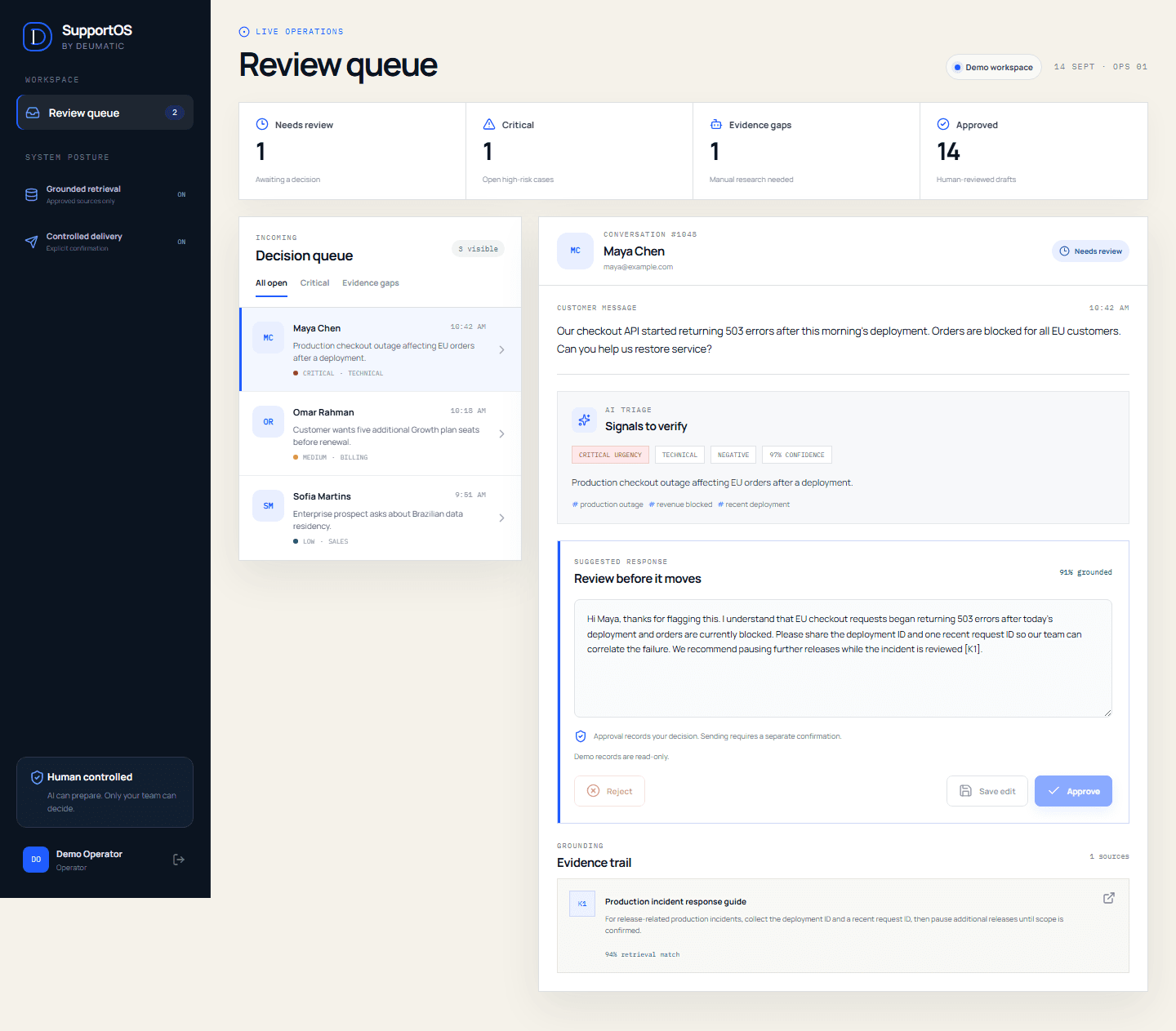
One decision surface connects customer context, AI triage, response preparation and source verification.
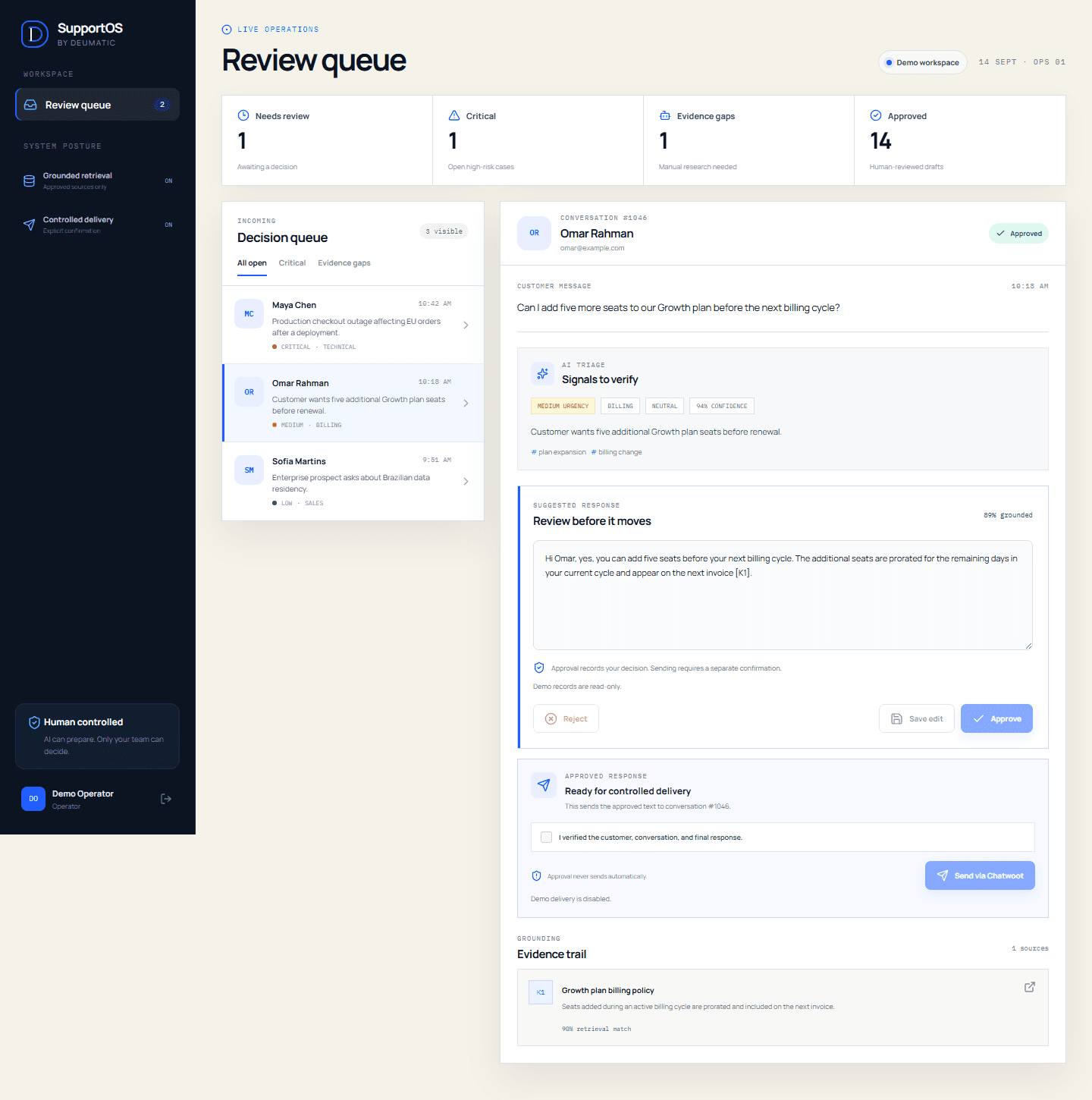
An approved response still needs destination verification before it can be sent.
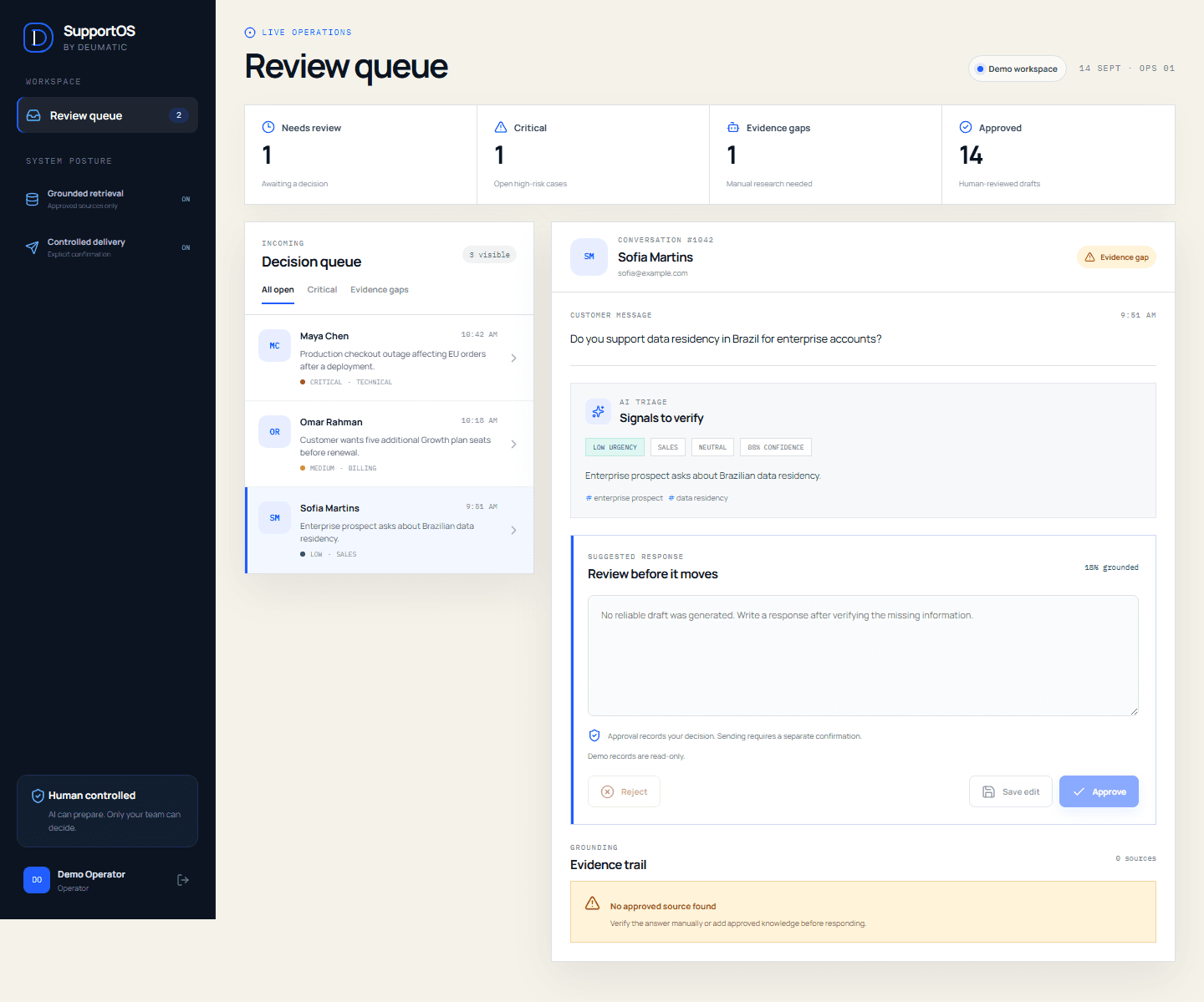
When approved knowledge is missing, the system stops and directs the case to human research.
Screens show labeled demo records created for product presentation. No customer adoption or performance metrics are claimed.
A surveillance prioritization prototype designed to help operators identify camera feeds that may deserve attention first.
Gemini API, Python, FastAPI, PostgreSQL, JavaScript and Vultr
Monitoring several camera feeds at once can create attention overload. The team explored how multimodal analysis could support prioritization without presenting the model as a replacement for human judgment.
The prototype analyzes camera snapshots with Gemini, assigns a risk level and surfaces the feeds that may require operator review.
A FastAPI service coordinates analysis and application workflows, while the frontend presents camera status, priorities and review signals in an operational interface.
The project included coordinated delivery planning, frontend work, Vultr integration and a working product demonstration prepared by the team.
Interface shown above is a designed representation for the case study, not a claim about production deployment.